
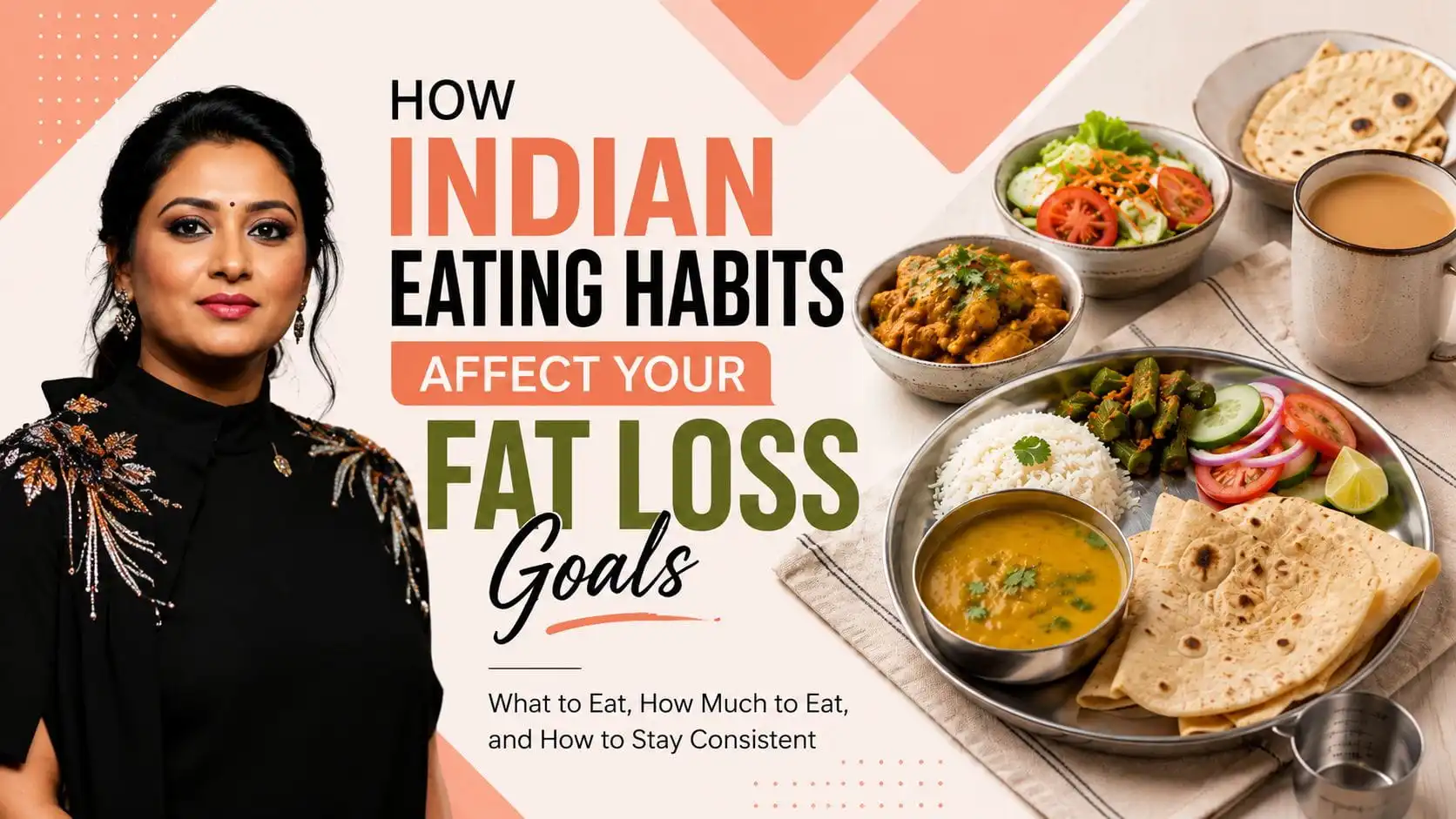
Most people trying to lose fat in India are not lazy and not uninformed. They’ve read enough about calories, carbs, and protein. Many have tried diets, cut rice for weeks, or gone through phases of eating “clean”. And yet, the fat doesn’t move.
Part of the problem is structural. Indian eating patterns – when you eat, what you eat, how much, and in what social context – are built around culture, convenience, and habit, not fat loss. That’s not a criticism. It’s just a fact that’s worth understanding clearly before you try to change anything.
This article is for Indian working professionals, students, and homemakers who are trying to lose fat without completely giving up Indian food. It covers the specific eating habits that create resistance, what actually matters for fat loss, and how to build a sustainable approach that fits a real Indian lifestyle.
No crash diets. No “cut all carbs”. Just honest, specific information.
Table of contents
- 1. Why Fat Loss Feels Difficult for Many Indians
- 2. Common Indian Eating Habits That Slow Fat Loss
- 3. Protein Intake in Indian Diets
- 4. Why Portion Size Matters More Than People Think
- 5. Sleep, Stress, and Indian Work Schedules
- 6. The Role of Movement Outside the Gym
- 7. Fat Loss Mistakes People Repeat for Months
- 8. What Sustainable Fat Loss Usually Looks Like
- 9. How Online Coaching Helps People Stay Consistent
- FAQ
1. Why Fat Loss Feels Difficult for Many Indians
Fat loss is a calorie problem at its core; you need to consume fewer calories than your body burns. But that’s harder to execute than it sounds when your environment, culture, and daily schedule push against it.
Here are the specific factors that make fat loss harder for many Indians:
Eating frequency patterns are irregular. Many Indian households have two large meals, lunch and dinner, with chai and snacks in between. This isn’t inherently bad, but it often means total calorie intake is underestimated because the snacks don’t feel like “real food”.
Meals are calorie-dense by design. Indian cooking uses significant amounts of oil, ghee, and sugar. A standard home-cooked dal-rice-sabzi-roti meal with one tablespoon each of ghee on roti and oil in the dal can easily cross 700–900 calories in a single sitting.
Protein intake is low across most Indian diets. Whether vegetarian or non-vegetarian, the average Indian meal is weighted heavily toward carbohydrates. Dal, rice, roti, and vegetables are the staples — all relatively low in protein per serving. Low protein makes fat loss harder because protein keeps you full and helps retain muscle.
Social eating is constant. Office birthday cake, festival mithai, family functions, chai with colleagues – there’s a social obligation attached to eating in Indian culture. Saying no feels rude. Saying yes repeatedly adds up.
Urban Indians have increasingly sedentary lifestyles. Desk jobs, two-hour commutes, and screen time after work mean most people are burning far fewer calories through movement than they assume.
None of this is unique to India, but the combination — high-calorie traditional food, low protein, irregular patterns, and a sitting-heavy lifestyle — creates real friction for fat-loss goals.
2. Common Indian Eating Habits That Slow Fat Loss
Specific habits matter more than general rules. Here are the ones that consistently add untracked calories or disrupt fat loss efforts:
Chai with sugar, multiple times daily. Two teaspoons of sugar per cup, two to four cups a day – that’s 80 to 160 calories from sugar alone, not counting full-fat milk. It feels like nothing because chai is a ritual, not a meal.
Late-night dinners. Many Indian families eat dinner between 9 PM and 11 PM, often after a long workday. Late eating doesn’t directly cause fat gain, but it usually means you’re eating a large meal with little activity afterward and going to sleep on a full stomach. It also compresses your hunger cycle the next morning, making breakfast feel unnecessary, which delays the first proper meal and often leads to larger, hungrier eating later.
Overeating rice or roti. Three rotis with dal and sabzi is a reasonable meal. Five rotis because they’re “light” isn’t right. The same applies to rice; people often serve themselves amounts that are 1.5–2x what a measured portion would be, especially when eating at home where servings are free.
Fried snacks as daily snacks. Pakoras, samosas, chaklis, and namkeen – these are calorie-dense and easy to eat absentmindedly. A small bowl of namkeen (50g) can have 250–300 calories. A single samosa is 150–200 calories. These are fine occasionally, but when they become the default 4 PM snack every day, they add up to 1,000+ extra calories per week.
Festival overeating and “earned rest” after it. Diwali, Holi, Eid, Navratri, and weddings are Indian festivals that are frequent and food-heavy. The issue isn’t the festival. It’s the mental reset that follows, where people decide to “start fresh on Monday” and eat poorly for a week after each one.
Weekend overeating. Eating carefully on weekdays and then eating out twice a day on weekends, with alcohol, rich food, and dessert, can erase an entire week of calorie control in two days.
Liquid calories. Sugary chai, packaged fruit juices (which have as much sugar as cold drinks), lassi with sugar, buttermilk with cream, cold coffee with ice cream — all of these add significant calories without making you feel full.
Habit Impact Table
| Habit | Approximate Daily Impact | Better Alternative |
|---|---|---|
| 3 cups of sweet chai (2 tsp sugar each) | +120–180 kcal | Reduce to 1 tsp sugar or switch to unsweetened black tea |
| 1 samosa as evening snack | +150–200 kcal | 2 boiled eggs or a small bowl of roasted chana |
| 5 rotis instead of 3 | +150–180 kcal | 3 medium rotis with more dal/sabzi for volume |
| Packaged fruit juice (200ml) | +90–120 kcal | Whole fruit or plain water with lemon |
| Full-fat milk in chai (3 cups) | +100–150 kcal | Low-fat milk or reduce quantity |
| Late-night dinner + dessert | +300–500 kcal | Eat dinner by 8 PM; skip or reduce dessert |
| Weekend restaurant meals x2 | +1,000–2,000 kcal extra | One meal out, one home-cooked, track portions |
3. Protein Intake in Indian Diets
This is the single biggest nutritional gap for most Indians trying to lose fat.
Fat loss requires a calorie deficit. But if you’re in a calorie deficit with low protein, you’ll lose muscle along with fat, slow your metabolism, feel hungry constantly, and struggle to maintain results. Protein is what makes a deficit sustainable.
Most nutrition guidelines suggest 1.6–2.2 grams of protein per kilogram of body weight for active people. A 70 kg person would need 112–154 grams of protein per day. The average Indian diet, even with dal and paneer, typically delivers 50–70 grams.
Why is protein so low in vegetarian Indian diets?
The primary protein sources – dal, rajma, chole, paneer, and soy – are present in Indian cooking, but portion sizes are small and cooking methods sometimes dilute their protein density. A typical serving of dal at home (1 katori, ~150 ml cooked) provides 6–8 grams of protein. Even with three rotis and rice, a vegetarian meal rarely crosses 15–18 grams of protein.
Non-vegetarian Indians don’t automatically have it easier. Many non-vegetarian Indians eat chicken or fish 2–3 times a week, in small quantities, with the bulk of the plate still being rice and roti.
Common low-protein breakfast choices. Poha, upma, idli with sambar, paratha – these are all carbohydrate-forward. Idli with sambar is a decent option, but the protein per serving is still modest (~5–8 grams for two idlis).
Protein Sources Table
| Food | Protein per Serving | Best Use Case |
|---|---|---|
| Paneer (100g) | 18–19g | Lunch/dinner subzi, bhurji, salad |
| Moong dal (1 katori cooked, 150g) | 7–8g | Any meal: pair with other sources |
| Rajma/Chole (1 katori cooked) | 9–12g | Lunch with rice or roti |
| Whole eggs (2 eggs) | 12–13g | Breakfast, snack |
| Egg whites (3–4) | 12–15g | Add to scramble or omelette |
| Chicken breast (100g cooked) | 25–30g | Lunch or dinner protein anchor |
| Greek yogurt / hung curd (150g) | 10–15g | Breakfast or snack |
| Soya granules (50g dry) | 23–25g | Add to bhurji, pulao, sabzi |
| Low-fat milk (250ml) | 8g | Chai, protein shake base |
| Tofu (100g) | 8–10g | Stir-fry, scramble, salad |
| Sprouts (1 bowl, ~100g) | 8–10g | Snack or salad addition |
Practical improvement: Replace at least one carb-heavy snack per day with a protein-rich option. Add soya granules to your usual sabzi. Increase the portion of dal or rajma and reduce the roti count by one. These small shifts, done consistently, can add 20–30 grams of protein per day without overhauling your entire diet.
4. Why Portion Size Matters More Than People Think
You can eat the right foods and still be in a calorie surplus if your portions are large. Portion distortion is a real problem, especially in India, where a generous serving is a cultural expression of hospitality.
Restaurant meals are almost always large. A standard restaurant butter chicken serving, a buttered naan, and a bowl of dal makhani easily exceed 1,200–1,500 calories in one sitting. This is fine occasionally. It’s not fine if you eat out three to four times a week, which many urban Indians do.
Buffets are a specific problem. At a wedding buffet or hotel breakfast buffet, the average person eats significantly more than they intend to. Research consistently shows that variety, large serving sizes, and social eating all increase consumption. Buffets check all three boxes.
Family serving habits. In Indian households, the person serving the food (usually a parent or spouse) often serves large portions as an expression of care. Refusing or asking for less can feel socially awkward. Most people eat what’s in front of them.
Hidden calories in cooking. A meal cooked with three tablespoons of oil adds 360 calories in oil alone. Ghee on roti, cream in paneer dishes, and coconut in South Indian cooking all are calorie-dense and easy to underestimate. You can eat a home-cooked Indian meal and think you’re eating healthily while still being in a significant calorie surplus.
The fix isn’t to become obsessive about weighing everything. But building awareness, even rough, approximate awareness, of what you’re eating matters. Using smaller plates, serving once and not going back for seconds, and reducing cooking oil by half are practical changes with real impact.
5. Sleep, Stress, and Indian Work Schedules
Fat loss is not purely a food problem. The conditions your body is operating under shape how it stores and burns fat.
Late work hours are common. Indian IT professionals, startup employees, and business owners frequently work past 9 or 10 PM. This leads to late dinners, late sleep, and insufficient rest. Chronic sleep deprivation, even mild, at 5–6 hours per night instead of 7–8, raises ghrelin (the hunger hormone) and lowers leptin (the satiety hormone). You feel hungrier, crave carbohydrate-heavy foods, and have less willpower to resist them.
Stress eating is underacknowledged. Deadlines, family pressures, and financial stress trigger cortisol, which increases appetite and specifically drives cravings for high-fat, high-sugar foods. Many people describe eating well all day and then losing control in the evenings after a stressful day. This is partly hormonal, not just a willpower issue.
Weekend recovery habits often undo the week. People who work hard during the week compensate on weekends with heavy social eating, alcohol, staying up late, and sleeping in. The disrupted sleep schedule alone (often called social jetlag) can affect metabolism and hunger hormones early in the following week.
What helps: Consistent sleep and wake times, even on weekends, make a meaningful difference. Managing stress through activity, not food, is easier said than done but worth building deliberately. And recognising that poor sleep and high stress are legitimate obstacles to fat loss, not excuses, allows you to address them rather than just try harder with food.
6. The Role of Movement Outside the Gym
Gym workouts matter, but they account for a smaller share of your total daily calorie burn than most people think. For someone exercising one hour a day, the other 23 hours of activity or inactivity matter just as much.
‘NEAT’ (Non-Exercise Activity Thermogenesis) is the term for all the calories you burn through daily movement that isn’t formal exercise: walking, climbing stairs, fidgeting, cooking, and cleaning. In a physically active lifestyle, NEAT can account for 400–800 extra calories burnt per day. In a sedentary urban Indian lifestyle, that number drops dramatically.
Step count matters. 8,000–10,000 steps a day has solid evidence behind it as a baseline for metabolic health and supporting fat loss. Most desk-bound urban Indians are doing 2,000–4,000 steps. That gap is meaningful.
How urban Indian life reduces movement:
- Driving or using cabs/autos instead of walking
- Taking elevators instead of stairs
- Household help that removes physical activity from the home
- Long commutes spent sitting
- Evening leisure time spent on screens rather than moving
Practical additions: A 20–30 minute walk after dinner costs no money and no gym membership, and it has a compounding effect over weeks. Taking calls while walking, parking farther from destinations, and doing household tasks yourself rather than outsourcing them all contribute to NEAT.
This isn’t about dramatic lifestyle changes. Adding 2,000–3,000 steps per day consistently can add up to an extra 100–200 calories burnt daily, which over a month adds up to the calorie equivalent of nearly a kilogram of fat.
7. Fat Loss Mistakes People Repeat for Months
These are common patterns that waste time without producing results:
Skipping meals. Skipping breakfast or lunch to “save calories” usually backfires. Hunger builds through the day, and by evening, most people overcompensate, eating more total calories than they would have across three normal meals. It also tanks energy and focus during the skipped hours.
Crash diets. Eating 800–1,000 calories a day for a few weeks produces fast initial weight loss, most of it water and muscle. The moment the diet ends, weight returns quickly because the body has adapted to fewer calories. Most people end this process weighing more than when they started and with less muscle.
Excessive cardio with no strength training. Running and walking are good. But relying only on cardio, without any resistance training, makes fat loss harder to maintain. Muscle is metabolically active tissue; it burns calories at rest. Losing muscle while losing fat means a slower metabolism and more difficulty maintaining results.
Following random YouTube workout plans. Watching a different workout video every day, with no structure, progressive overload, or consistency, produces minimal results. Exercise stimulus needs to be progressive and consistent to create change.
Inconsistent routines. Going hard for two weeks, stopping for three weeks, and restarting this cycle is extremely common. The body adapts and changes with sustained stimulus over months, not bursts of effort. Progress requires boring, unglamorous consistency more than intensity.
8. What Sustainable Fat Loss Usually Looks Like
There’s no version of fat loss that’s comfortable the whole way through. A moderate calorie deficit means you’ll feel somewhat hungry at times. That’s normal. The goal is to make it manageable, not to pretend you can lose fat while eating whatever you want.
Calorie awareness. You don’t need to track every gram forever, but at least a phase of tracking using apps like MyFitnessPal or Cronometer with Indian food databases helps you understand where your calories are actually coming from. Most people are genuinely surprised.
Protein at every meal. Not as a supplement-heavy strategy, but as a consistent habit. Each meal should have a meaningful protein source. This reduces hunger, preserves muscle, and makes the deficit sustainable.
Strength training 3–4 times per week. For most people with desk jobs and little physical labour, building muscle through resistance training is important for long-term fat loss and metabolic health. It doesn’t require a sophisticated gym; bodyweight training done consistently works.
Realistic timelines. 0.5–1 kg of fat loss per week is a sustainable and meaningful rate. At 0.75 kg per week, you lose about 3 kg per month. Expecting 5–6 kg in a month leads to crash dieting, muscle loss, and rebound. Most people who maintain fat loss results take 4–8 months to lose 10–15 kg.
Consistency over perfection. Eating well 80–85% of the time produces results. A festival, a wedding, or a family dinner doesn’t ruin progress. Missing a workout doesn’t end a programme. The goal is to keep the average high, not to be perfect every day.
9. How Online Coaching Helps People Stay Consistent
Most people know the basics of fat loss. The gap is in execution, specifically, consistency over 3–6 months without losing motivation or making repeated mistakes.
This is where working with a coach changes outcomes for many people.
Accountability works. When someone is checking your food logs, asking about your workout, and reviewing your progress, you show up more consistently. It’s not about fear; it’s about having a structure that keeps you engaged even when motivation dips.
Customised diet planning for Indian lifestyles. Generic meal plans built around chicken breast and broccoli don’t fit an Indian working professional eating home-cooked food or a vegetarian family household. A good fat loss coach in India builds plans around what you actually eat, with adjustments, not replacements.
Workout programming that fits your schedule. Whether you have 30 minutes three times a week or an hour five times, a structured programme beats random workouts. Progressive overload, recovery, and exercise selection – these things matter and require planning.
Support during difficult phases. Plateaus happen. Life disruptions, travel, festivals, and illness happen. A coach helps you navigate these without losing months of progress by adjusting the plan rather than abandoning it.
Flexibility for real life. A good online fitness coach in India doesn’t tell you to skip the wedding dinner or avoid mithai at Diwali. They help you build the habits and the buffer that lets you enjoy those things without guilt or setback.
If you’re at a point where you’ve tried multiple approaches independently and aren’t making progress, working with an experienced online fitness coach in India who understands Indian food, culture, and lifestyle is worth considering. The structure and accountability often make the difference between another month of inconsistency and real, lasting results.
FAQ
1. Can I lose fat while eating Indian food? Yes. Fat loss depends on a calorie deficit, not on avoiding specific cuisines. Indian food can absolutely be part of a fat loss diet when portion sizes, cooking methods, and protein intake are adjusted. Rice, roti, dal, and vegetables are not the problem — the quantities, the cooking oils, and the overall calorie picture are what matter.
2. Is rice or roti better for fat loss? Neither is inherently better. Both are carbohydrate sources with similar calorie counts per gram. The issue is usually the portion size, not the food itself. If you consistently overeat roti, switch to smaller portions. The same applies to rice. Choose whichever fits your preference and hunger pattern better.
3. Why am I not losing weight even though I’m eating less? A few common reasons: you may be eating less than before but still above your calorie deficit threshold; you may be underestimating calories from cooking oils, chai, and snacks; you may be losing fat but gaining or retaining water weight; or your calorie needs may have adjusted downward due to weight loss or muscle loss.
4. How much protein should I eat daily for fat loss? A practical target for most people is 1.6–2.0 grams per kilogram of body weight. A 65 kg person should aim for 104–130 grams per day. This is higher than most Indians currently eat and requires deliberate effort to hit without supplementation.
5. Do I need protein supplements to lose fat? No. Whole food sources of protein – eggs, paneer, dal, rajma, chole, chicken, fish, Greek yoghurt, and soya – can meet your needs. Protein powder (whey or plant-based) is a convenient supplement when whole food isn’t practical, but it’s not necessary.
6. Is ghee bad for fat loss? Ghee isn’t inherently bad, but it is calorie-dense. 1 tablespoon has about 120 calories. Using ghee in moderation is fine. Using it liberally across three meals because “it’s healthy fat” will create a calorie surplus. Track it if you’re adding it to food.
7. Can I lose fat without going to a gym? Yes. Fat loss is primarily determined by diet. Exercise, including home workouts, bodyweight training, and walking, supports fat loss and helps preserve muscle, but you don’t need a gym to lose fat. Consistency with whatever activity you can sustain matters more than the setting.
8. How long does it take to see visible fat loss results? Most people notice a measurable difference (in the scale, measurements, or how clothes fit) within 3–4 weeks of consistent effort. Visible changes that others notice typically happen after 6–8 weeks. Significant transformation takes 4–6 months of sustained consistency. There is no faster realistic timeline that doesn’t involve extreme measures with high rebound rates.
About the Author
Raman Fitness Coach
Raman Fitness Coach works with Indian clients who want practical fat loss guidance that fits real daily life. Her coaching focuses on balanced Indian meals, sustainable habits, home and gym workouts, and realistic nutrition planning without extreme dieting.
She shares simple strategies for portion control, protein intake, meal timing, and consistency to help clients improve fitness, energy levels, and long-term health.
Areas of Focus
- Indian diet planning
- Weight loss coaching
- Muscle building support
- Lifestyle habit improvement
- Online fitness coaching for busy professionals
Learn more at:
Raman Fitness Coach Official Website